

Two Nerves, Two Tunnels | How to Tell the Difference
When your hand goes numb or starts to tingle, it's natural to assume carpal tunnel syndrome. However, another condition, cubital tunnel syndrome, produces many of the same symptoms, and the two can easily be mistaken for each other.
The primary difference between carpal tunnel and cubital tunnel syndrome is the nerve affected and where it becomes compressed. Carpal tunnel syndrome involves the median nerve at the wrist, while cubital tunnel syndrome involves the ulnar nerve at the elbow. These are the two most common nerve compression conditions affecting the upper extremity. Because each requires a different treatment, getting the right diagnosis matters.
Carpal Tunnel Syndrome: The Median Nerve
Carpal tunnel syndrome affects the median nerve at the wrist. The carpal tunnel is a narrow passageway at the base of the palm, formed by the wrist bones and the transverse carpal ligament.
The median nerve shares this tight space with nine flexor tendons. Swelling of the surrounding tissues or changes in the structure of the wrist can increase pressure on the nerve, resulting in numbness, tingling, pain, and weakness.
For a closer look at the anatomy of the wrist and how median nerve compression develops, read our article, Understanding Carpal Tunnel Syndrome.
Cubital Tunnel Syndrome: The Ulnar Nerve
Cubital tunnel syndrome affects the ulnar nerve at the elbow, the same nerve responsible for that familiar jolt when you hit your "funny bone."
The cubital tunnel runs along the inside of the elbow. The nerve can become compressed beneath Osborne's ligament or as it passes between the two heads of the flexor carpi ulnaris muscle.
The ulnar nerve at the elbow is particularly vulnerable to direct pressure and prolonged stretching when the elbow is bent.
Why Carpal Tunnel and Cubital Tunnel Syndrome Are So Easy to Confuse
Both conditions can interfere with everyday activities, from working at a computer to driving, preparing meals, or getting a good night's sleep.
- Similar sensations. Both can cause numbness, tingling, pins and needles, and aching in the hand.
- A shared finger. The ring finger receives sensation from both nerves. The median nerve supplies the thumb side, while the ulnar nerve supplies the pinky side.
- Similar weakness. Both can make gripping difficult, interfere with fine motor skills, and cause you to drop objects.
- Position-dependent symptoms. Both can flare during activities such as driving or holding a phone. Sleeping with bent wrists or elbows can also aggravate symptoms.
- They can happen together. A study published in the journal Hand found that approximately 23% of patients undergoing surgery for ulnar nerve compression at the elbow at one medical institution also underwent carpal tunnel release.
Many of these overlapping symptoms are discussed in greater detail in our article on the Symptoms of Carpal Tunnel Syndrome.
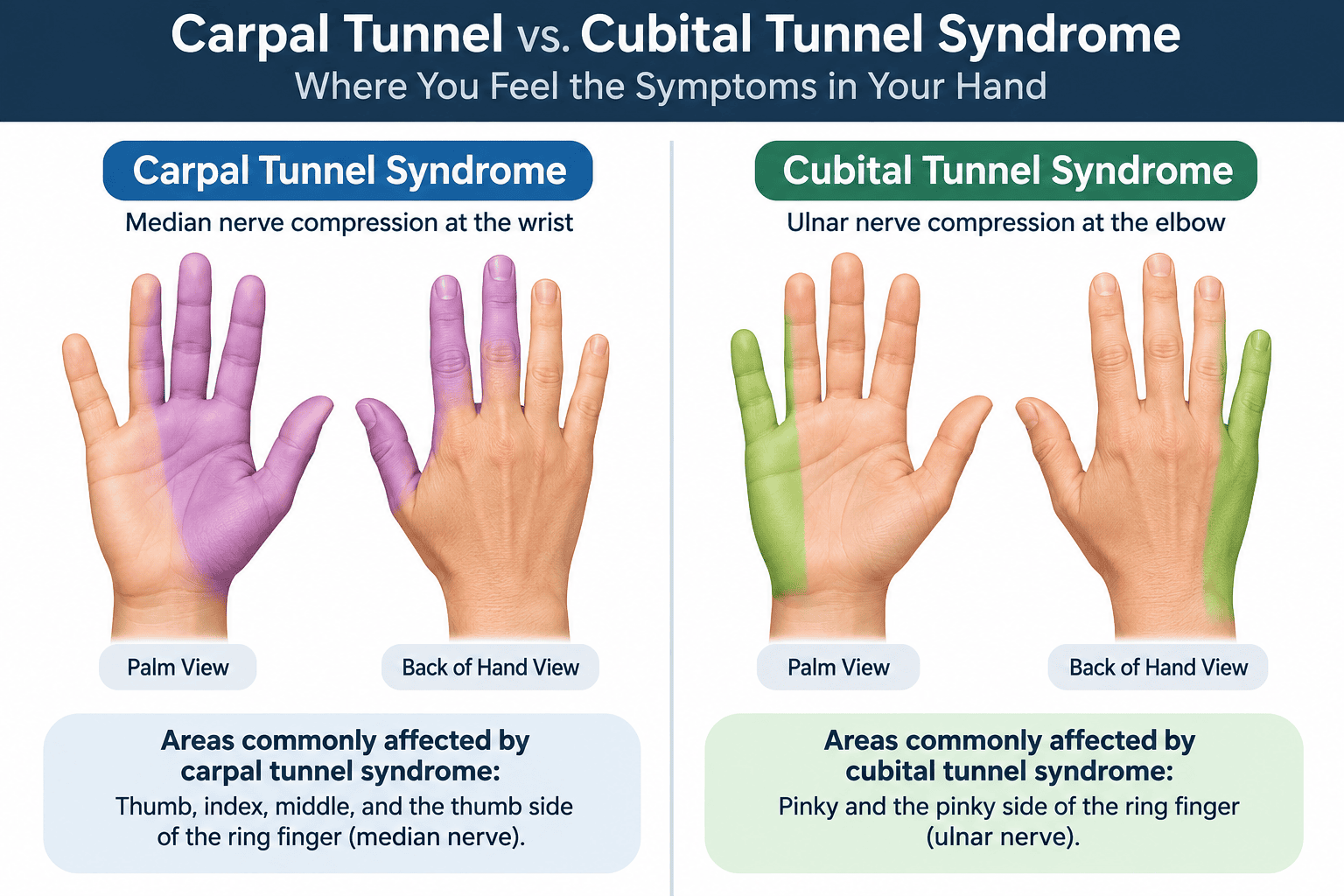
Key Differences Between Carpal Tunnel and Cubital Tunnel Syndrome
| Carpal Tunnel Syndrome | Cubital Tunnel Syndrome | |
|---|---|---|
| Nerve affected | Median nerve | Ulnar nerve |
| Location of compression | Wrist | inside of the elbow |
| Fingers affected | Thumb, index, middle, and thumb side of ring finger | Pinky and pinky side |
| What makes it worse | Sustained wrist bending, | Prolonged elbow bending |
| Other common symptoms | Burning or aching in the hand, wrist, or forearm; sensation of swollen fingers | Aching on the inside |
| Muscle weakness | Difficulty gripping, pinching, | Reduced grip and pinch strength; |
| Advanced signs | Muscle wasting at the base of the thumb | Muscle wasting between |
What Causes Carpal Tunnel vs. Cubital Tunnel Syndrome?
Carpal tunnel syndrome can be associated with wrist injuries, arthritis, inflammatory conditions, diabetes, pregnancy-related fluid retention, and anatomical differences in the wrist. Forceful repetitive movements and prolonged use of vibrating tools may also contribute.
While typing and computer use can aggravate symptoms, ordinary keyboard use has not been established as an independent cause of carpal tunnel syndrome.
Learn more about the underlying conditions and activities associated with carpal tunnel syndrome causes.
Cubital tunnel syndrome can develop from repeated pressure on the inside of the elbow, prolonged elbow bending, or irritation caused by the ulnar nerve moving over the bony prominence of the elbow. Previous elbow fractures, arthritis, and bone spurs may also contribute.
For more information about these risk factors, read our article, Cubital Tunnel Syndrome – What's That?
Can You Tell Which Condition You Have Based on Your Symptoms?
The location of your numbness, the activities that aggravate your symptoms, and the types of weakness you experience can provide important clues about which nerve may be affected.
However, nerve symptoms don't always follow textbook patterns. For example, numbness in the pinky and ring fingers does not necessarily mean you have cubital tunnel syndrome. The ulnar nerve can also become compressed at the wrist in a passageway known as Guyon's canal.
Other conditions, including a pinched nerve in the neck or peripheral neuropathy, can produce similar symptoms. A professional evaluation can help identify the source of your symptoms before you begin treatment.
How Dr. Donnelly Makes the Diagnosis
An accurate diagnosis starts with a detailed history of your symptoms, medical conditions, activities, and prior injuries, followed by a thorough physical examination.
For suspected carpal tunnel syndrome, the examination may include:
- Phalen's test: Bending the wrist to determine whether the position reproduces symptoms associated with median nerve compression.
- Tinel's sign: Gently tapping over the median nerve at the wrist to determine whether tingling occurs in the affected fingers.
- Sensory and strength testing: Evaluating finger sensation, thumb strength, and grip and pinch function.
Learn more about these clinical findings in our article on the Signs of Carpal Tunnel Syndrome.
For suspected cubital tunnel syndrome, similar assessments may be performed at the elbow, including determining whether bending the elbow reproduces symptoms and evaluating the sensation and muscle function controlled by the ulnar nerve.
Dr. Donnelly may also examine the neck and shoulder to determine whether symptoms originate elsewhere along the nerve's pathway.
When appropriate, X-rays can help identify underlying bone abnormalities, arthritis, or changes resulting from previous injuries. Nerve conduction studies and electromyography (EMG) can help identify the location and severity of nerve dysfunction, particularly when both conditions are suspected.
Treatment: Same Approach, Different Targets
For both conditions, the goal of treatment is to relieve pressure on the affected nerve, improve function, and minimize the risk of permanent nerve damage.
Treatment for mild to moderate cases often begins with conservative measures. However, significant muscle weakness, muscle wasting, or advanced nerve compression may warrant earlier surgical intervention.
Nonsurgical Treatment for Carpal Tunnel Syndrome
- Modifying activities that require sustained or forceful wrist bending
- Wearing a neutral-position wrist splint, especially at night
- Anti-inflammatory medications, when appropriate, to manage associated discomfort
- Corticosteroid injections, which may provide temporary symptom relief and help support the diagnosis
In our Carpal Tunnel Syndrome Questions & Answers article, Dr. Donnelly addresses common patient concerns about work-related activities, treatment options, and long-term outcomes.
Nonsurgical Treatment for Cubital Tunnel Syndrome
- Avoiding direct pressure on the elbow, sometimes using an elbow pad
- Limiting prolonged elbow bending, such as using an earpiece for phone calls
- Wrapping a towel around the elbow at night or wearing a brace to prevent excessive bending
- Hand therapy and medications for symptom management, when appropriate
This is where a misdiagnosis can cost you valuable time. A wrist splint won't address nerve compression occurring at the elbow, and an elbow brace won't address compression of the median nerve at the wrist.
Surgical Treatment for Carpal Tunnel and Cubital Tunnel Syndrome
When conservative treatment is unsuccessful or nerve compression is advanced, surgery may be recommended.
Carpal tunnel release involves dividing the transverse carpal ligament to create more space for the median nerve. Dr. Donnelly performs both open carpal tunnel release and endoscopic carpal tunnel release procedures.
Cubital tunnel surgery may involve releasing the tissue compressing the ulnar nerve through an open or endoscopic procedure, moving the nerve to the front of the elbow (anterior transposition), or removing part of the bony prominence on the inside of the elbow (medial epicondylectomy).
The appropriate procedure depends on the location and severity of the compression, the patient's anatomy, and other clinical findings.
Recovering From Carpal Tunnel and Cubital Tunnel Surgery
Following surgery for either condition, some patients experience relatively rapid improvement in numbness and tingling. For others, nerve recovery can take several months or longer.
Recovery timelines vary depending on the surgical procedure, the patient's overall health, and the severity and duration of nerve compression before treatment. When significant nerve damage or muscle wasting has already occurred, some loss of strength or sensation may be permanent.
For a detailed look at postoperative milestones, returning to work, and resuming everyday activities, read our article on Carpal Tunnel Surgery Recovery.
Frequently Asked Questions
Does carpal tunnel syndrome cause numbness in the pinky finger?
Typically, no. The median nerve does not supply sensation to the pinky finger. Numbness in the pinky and the adjacent side of the ring finger more often points to ulnar nerve involvement, although an evaluation is needed to confirm the source.
Can cubital tunnel syndrome cause wrist or hand pain?
Yes. Although the nerve compression occurs at the elbow, symptoms can extend along the forearm and into the wrist and hand. The location of your discomfort does not necessarily indicate where the nerve is compressed.
Is cubital tunnel syndrome more serious than carpal tunnel syndrome?
Neither condition is inherently more serious than the other. The severity depends on the degree of nerve compression and the extent of nerve damage. Early diagnosis and appropriate treatment are important for both conditions.
Don't Wait on Persistent Hand Numbness
Identifying the source of persistent hand numbness, tingling, or weakness is the first step toward effective treatment. An early evaluation may help prevent lasting nerve damage and preserve hand function.
If you are experiencing persistent or recurring hand numbness, tingling, or weakness, request an appointment with Dr. Donnelly to determine what's causing your symptoms and which treatment options are right for you.
About Dr. Brandon P. Donnelly, M.D.

If you’re experiencing numbness, tingling, or hand weakness, early evaluation can make a significant difference in your recovery. Dr. Donnelly proudly serves patients throughout Greater New Orleans, including Metairie, Covington, Mandeville, and the North Shore.
Call our office or request an appointment online: