
For many families in the New Orleans area, Mardi Gras break means one thing: a ski trip out west or up north. A week in the mountains can be unforgettable — but a fall on the slopes can quickly turn into a painful reminder that your hands and arms often take the brunt of the impact.
If you took a spill on the slopes and returned home from your Mardi Gras ski trip with lingering pain, swelling, bruising, or weakness in your hand, wrist, or elbow, it’s worth having the injury evaluated. What may feel like a simple sprain can sometimes be a torn ligament or fracture that requires prompt treatment. Persistent discomfort, limited motion, or difficulty gripping or lifting are signs that it may be time to be evaluated by an orthopedic specialist like Dr. Brandon P. Donnelly, MD. Early diagnosis and treatment can make the difference between a smooth recovery and long-term instability, stiffness, or loss of function.
Below are some of the most common upper extremity injuries seen after ski trips.
Skier’s Thumb (UCL Tear of the Thumb)
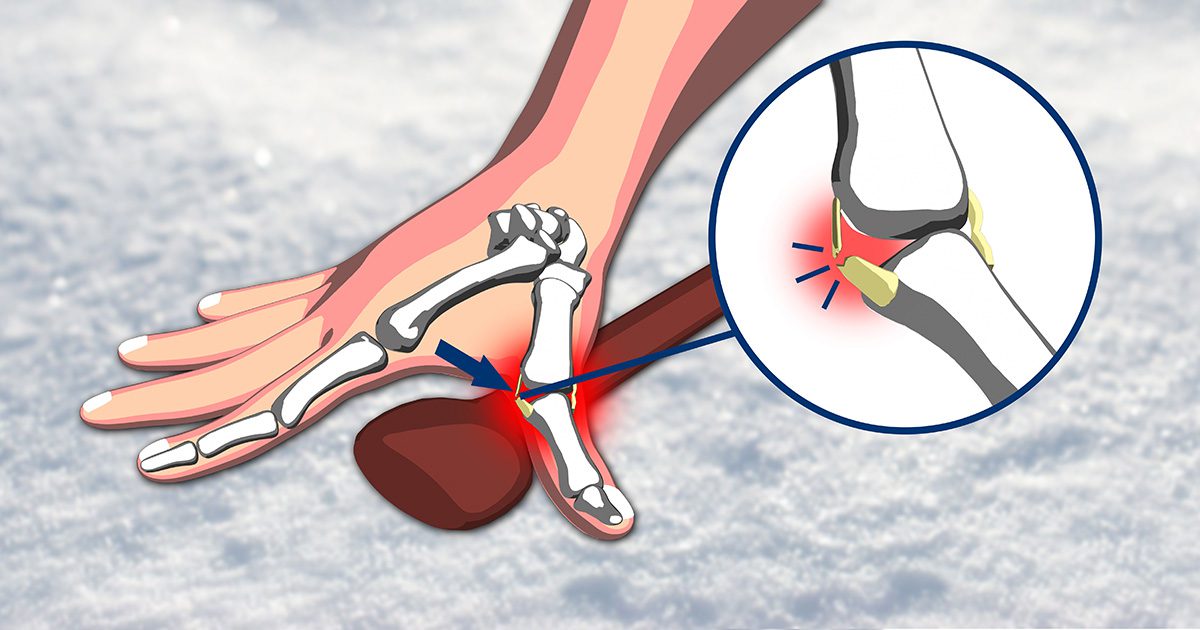
Skier’s thumb is an acute sprain or tear of the ulnar collateral ligament (UCL) at the base of the thumb (the MCP joint). This ligament stabilizes the thumb during gripping and pinching.
The injury most commonly occurs during a fall onto an outstretched hand while holding a ski pole, which forces the thumb away from the hand.
Symptoms May Include:
- Swelling and bruising at the base of the thumb
- Pain with pinching or gripping
- Weakness or instability
- Decreased range of motion
Partial tears may heal with splinting and hand therapy. Complete tears — especially those with displacement (a Stener lesion) — often require surgical repair to restore stability and function.
Prompt evaluation is important. A delayed diagnosis can lead to chronic instability and long-term weakness.
Wrist Fractures (Distal Radius Fractures)
One of the most common ski injuries is a wrist fracture caused by a fall onto an outstretched hand (often referred to as a FOOSH injury).
Warning Signs:
- Immediate pain and swelling
- Deformity or visible “bending” of the wrist
- Difficulty moving the wrist or fingers
- Numbness or tingling
Some fractures are stable and can be treated in a cast. Others are displaced or unstable and may require surgical fixation to restore proper alignment and prevent long-term stiffness or arthritis.
Even if the wrist “doesn’t look broken,” persistent pain after a ski fall warrants an x-ray.
Scaphoid Fractures
The scaphoid is a small bone in the wrist that is particularly vulnerable in ski-related falls. A scaphoid fracture can be subtle and may not show up immediately on initial x-rays.
Why You Should Take This Injury Seriously
The scaphoid has a limited blood supply, which means fractures in this bone do not always heal easily on their own. When a scaphoid fracture is missed or left untreated, it can lead to delayed healing, chronic pain, decreased wrist strength, or even long-term arthritis. Prompt evaluation and appropriate treatment help ensure proper healing and reduce the risk of lasting wrist dysfunction.
Symptoms:
- Pain at the thumb side of the wrist
- Tenderness in the “anatomical snuffbox”
- Swelling without obvious deformity
If pain persists despite a “normal” x-ray, advanced imaging such as an MRI may be necessary.
Elbow Injuries (Radial Head Fractures & Ligament Tears)
When you fall while skiing, the force can travel up the forearm into the elbow.
Common Ski-Related Elbow Injuries:
- Radial head fractures
- Elbow dislocations
- Ligament injuries
Symptoms:
- Pain when rotating the forearm
- Limited ability to fully straighten the elbow
- Swelling and bruising
Many radial head fractures are treated non-operatively with early motion. More complex injuries may require surgical intervention to restore stability and prevent stiffness.
When Should You Be Evaluated?
After a ski fall, consider scheduling an evaluation if you experience:
- Swelling that does not improve after a few days
- Persistent pain with gripping, lifting, or rotating the arm
- Weakness or instability
- Numbness or tingling
- Limited range of motion
Trying to “push through it” can sometimes convert a treatable injury into a chronic problem.
Treatment Options
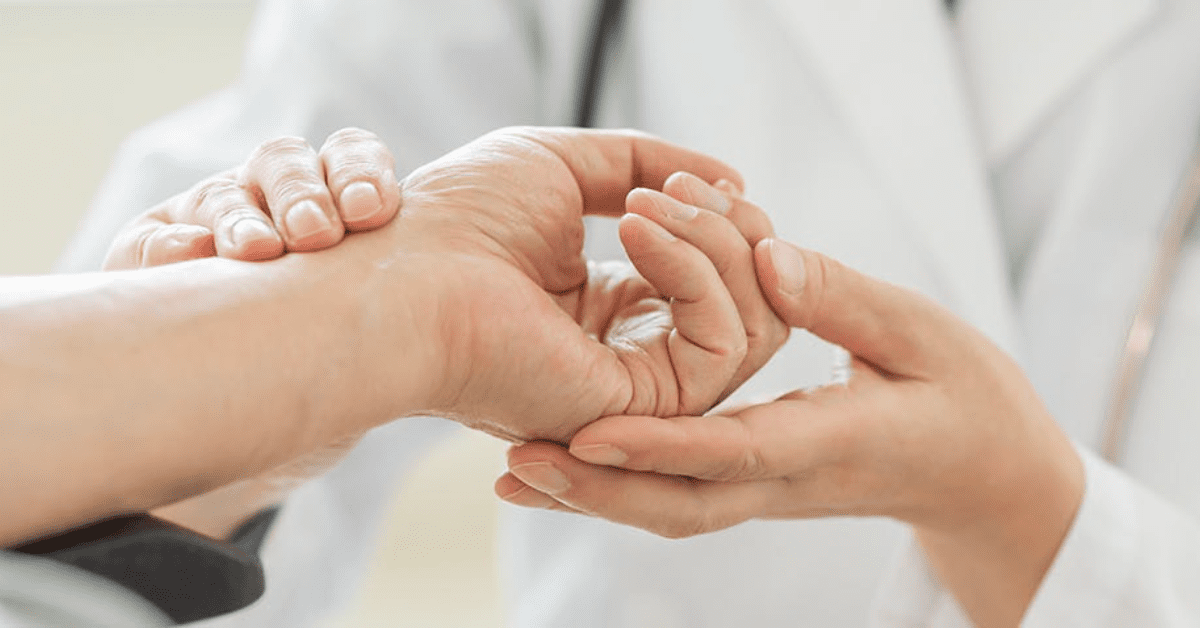
Depending on the injury, treatment may include:
- Splinting or casting
- Activity modification
- Hand therapy
- Minimally invasive surgical repair
- Ligament reconstruction
- Fracture fixation
Dr. Donnelly also utilizes advanced techniques such as WALANT (wide-awake local anesthesia no tourniquet), as well as regenerative therapies like platelet-rich plasma in select cases.
Don’t Let a Ski Injury Linger
Mardi Gras break memories should last — not your pain.
If you’re concerned about a hand, wrist, or elbow injury after a recent ski trip, early evaluation can help protect long-term strength and mobility.
Request an appointment at our Metairie, Boutte or Marrero office. If your injury occurred after hours on Friday or Saturday, orthopedic urgent care may also be available.
The sooner the injury is properly diagnosed, the better your chances of a full recovery — and getting back to the activities you enjoy.
About Dr. Brandon P. Donnelly, MD
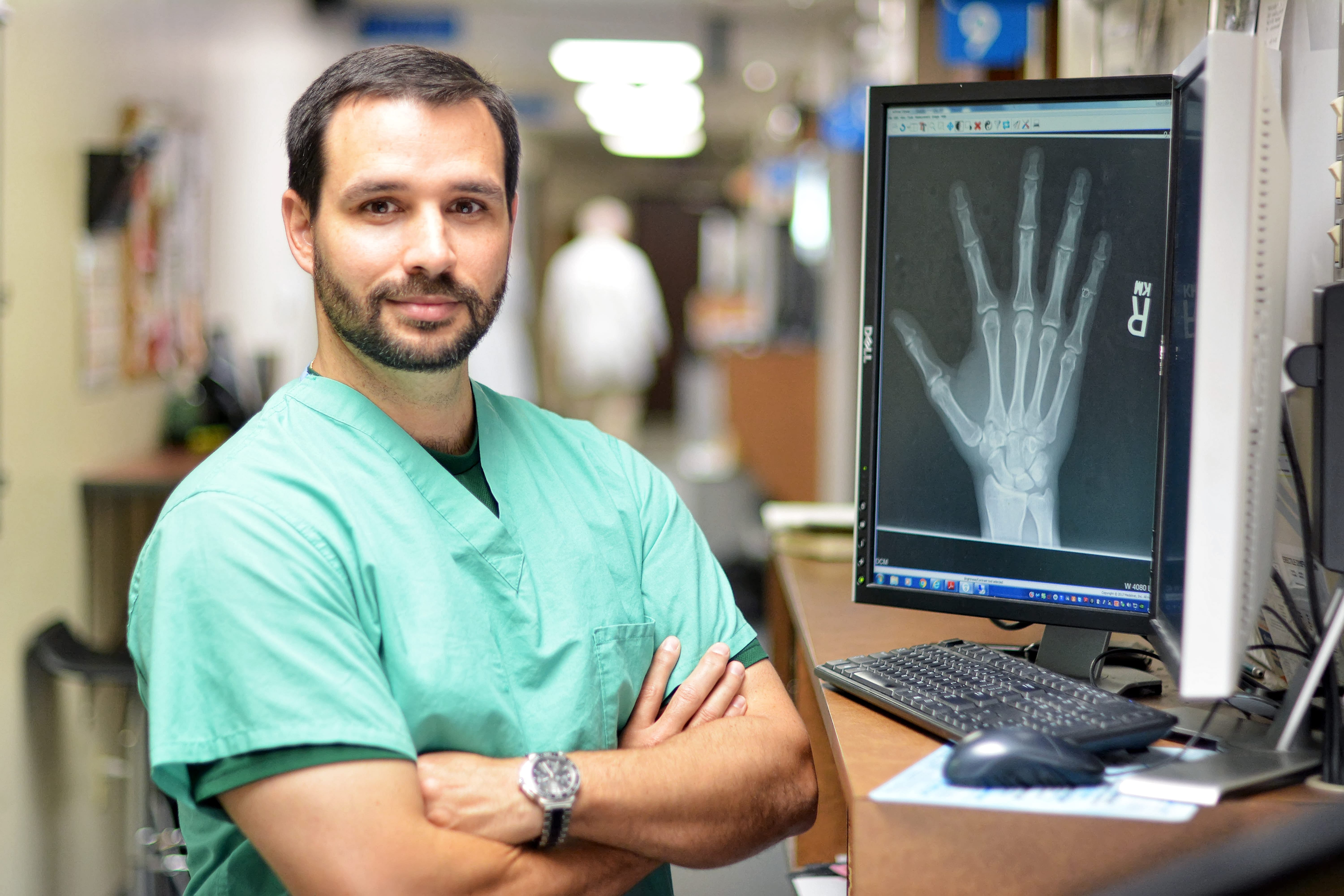 Dr. Brandon P. Donnelly is a board certified orthopedic hand specialist with Pontchartrain Orthopedics & Sports Medicine. Dr. Donnelly completed his hand and microsurgery fellowship at the prestigious Philadelphia Hand to Shoulder Center. Dr. Donnelly treats all ages of patients in the greater New Orleans area for hand, wrist, and elbow conditions.