

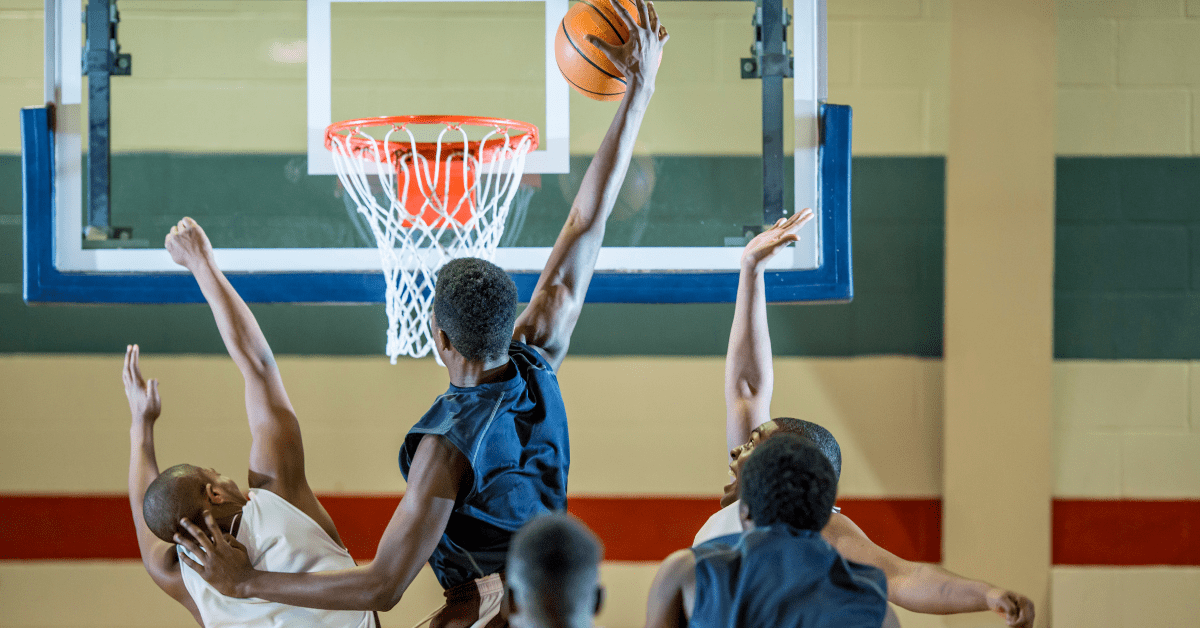
Every March, basketball fans across the country turn their attention to the excitement of March Madness. While the NCAA tournament showcases incredible athletic performance, it also highlights an important reality of the sport: basketball places significant stress on the upper extremities.
In orthopedic medicine, the term extremities refers to the limbs of the body. When discussing basketball injuries of the upper extremities, specialists are typically referring to injuries involving the hand, wrist, and elbow. These structures work together to allow players to pass, catch, dribble, and shoot the basketball.
According to the American Academy of Orthopaedic Surgeons, specialists in hand surgery diagnose and treat conditions affecting the hand and upper extremity, which includes the fingers, hands, wrists, forearms, and elbows.
Because these movements occur repeatedly and often at high speed, the hand, wrist, and elbow are among the most commonly injured areas in basketball players.

Why Basketball Players Injure the Hand, Wrist, or Elbow
Basketball is a fast-paced sport that requires constant use of the arms and hands. Players frequently experience impacts with the ball, the court, or other players. The repetitive motions of shooting and passing can also place stress on tendons and ligaments.
Common causes of extremity injuries in basketball include:
- catching a fast pass incorrectly
- collisions with other players
- falls onto an outstretched hand
- repetitive shooting motions
- blocking or rebounding contact
Even recreational players can develop injuries when the hand, wrist, or elbow is forced into an awkward position.
Common Basketball Injuries of the Hand
Jammed Fingers
A jammed finger occurs when a basketball strikes the fingertip and forces the joint backward. This is one of the most common injuries seen in basketball players.
Symptoms may include:
- swelling
- pain
- stiffness
- difficulty bending the finger
While many jammed fingers improve with rest and splinting, some injuries may involve ligament damage or fractures that require medical evaluation.
As Dr. Donnelly explains in his article “Jammed or Broken Finger?”, jammed finger injuries often occur during routine basketball plays such as rebounding or attempting a steal. Players may feel immediate pain but assume the injury is minor when it may actually be more serious.
“Pulling on any joint could create further stress on a newly injured ligament.”
Attempting to “pop” or pull a finger back into place can worsen ligament injuries and delay healing. Instead, the recommended initial treatment is the RICE method—rest, ice, compression, and elevation—followed by stabilization such as buddy taping when appropriate.
If swelling, deformity, or severe pain persists, evaluation by a specialist may be necessary to determine whether the injury involves a fracture, dislocation, or ligament tear.
Finger Dislocations
Finger dislocations occur when the bones of a finger joint are forced out of position. These injuries may cause visible deformity and significant pain.
Prompt treatment is important to restore proper alignment and prevent long-term joint stiffness.
Hand Fractures
The bones of the hand, called metacarpals, can fracture from direct impact during basketball play. These fractures may occur when a player falls or strikes another player during competition.
Symptoms often include swelling, bruising, and difficulty gripping the ball.
Wrist Injuries in Basketball
Wrist Sprains
A wrist sprain is one of the most common upper extremity injuries in basketball. It typically occurs when a player falls and lands on an outstretched hand.
Symptoms may include:
- pain during movement
- swelling
- decreased grip strength
- limited range of motion
Severe wrist sprains may involve ligament tears that require specialized treatment.
Wrist Tendonitis
Repetitive basketball activities such as dribbling, shooting, and passing can irritate the tendons around the wrist. This condition, known as wrist tendonitis, can cause persistent discomfort and reduced performance.
Early treatment can prevent the condition from worsening.
Elbow Injuries in Basketball Players
Elbow Tendonitis
Elbow Bursitis
Ligament Strain
When to Seek Medical Care
Many minor basketball injuries improve with rest and basic care. However, certain symptoms should prompt evaluation by a specialist:
- significant swelling or bruising
- visible deformity of the finger or wrist
- inability to move a finger, wrist, or elbow
- persistent pain lasting more than several days
- numbness or tingling in the hand
Early diagnosis and treatment can help prevent long-term complications and allow athletes to return to play safely.
Preventing Basketball Injuries of the Extremities
Players can reduce their risk of injury by taking several preventive measures:
- warming up before playing
- strengthening the muscles of the hand and forearm
- practicing proper catching and shooting techniques
- taping or bracing previously injured fingers
- avoiding play when pain or swelling is present
Taking these steps can help protect the hand, wrist, and elbow, allowing players to stay active throughout basketball season.
Preventing Basketball Injuries of the Extremities
Basketball injuries affecting the extremities can interfere with daily activities and athletic performance. Evaluation by a specialist ensures that injuries involving the hand, wrist, and elbow are properly diagnosed and treated.
Dr. Brandon P. Donnelly specializes in conditions affecting the hand, wrist, and elbow and provides care for a wide range of sports injuries involving the upper extremities.
Request an appointment at our Metairie, Boutte or Marrero office. If your injury occurred after hours on Friday or Saturday, orthopedic urgent care may also be available.
If you are experiencing pain or limited motion following a basketball injury, scheduling an evaluation can help determine the best path toward recovery.
About Dr. Brandon P. Donnelly, MD
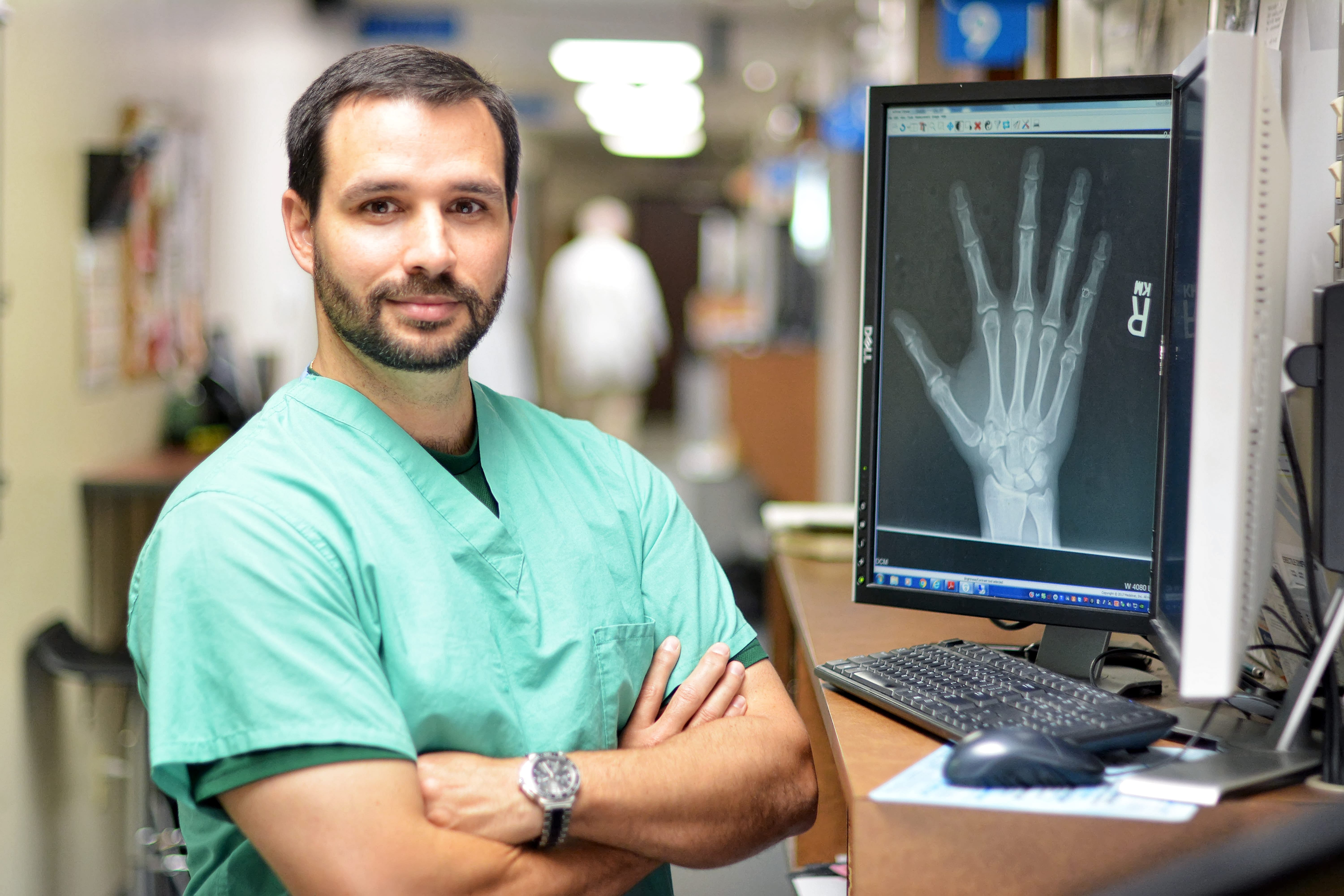 Dr. Brandon P. Donnelly is a board certified orthopedic specialist of the upper extremities with Pontchartrain Orthopedics & Sports Medicine. Dr. Donnelly completed his hand and microsurgery fellowship at the prestigious Philadelphia Hand to Shoulder Center. Dr. Donnelly treats all ages of patients in the greater New Orleans area in his Metairie, Boutte and Marrero offices.